Affiliate Marketing Simulation
Expand your course to cover Referral Marketing with this first of its kind performance marketing simulation from Simbound

Encourage Students
To Surpass Boundaries
The Affiliate simulation teaches how profitable online marketing networks function and how they drive new customer acquisition through strategic partner incentives.
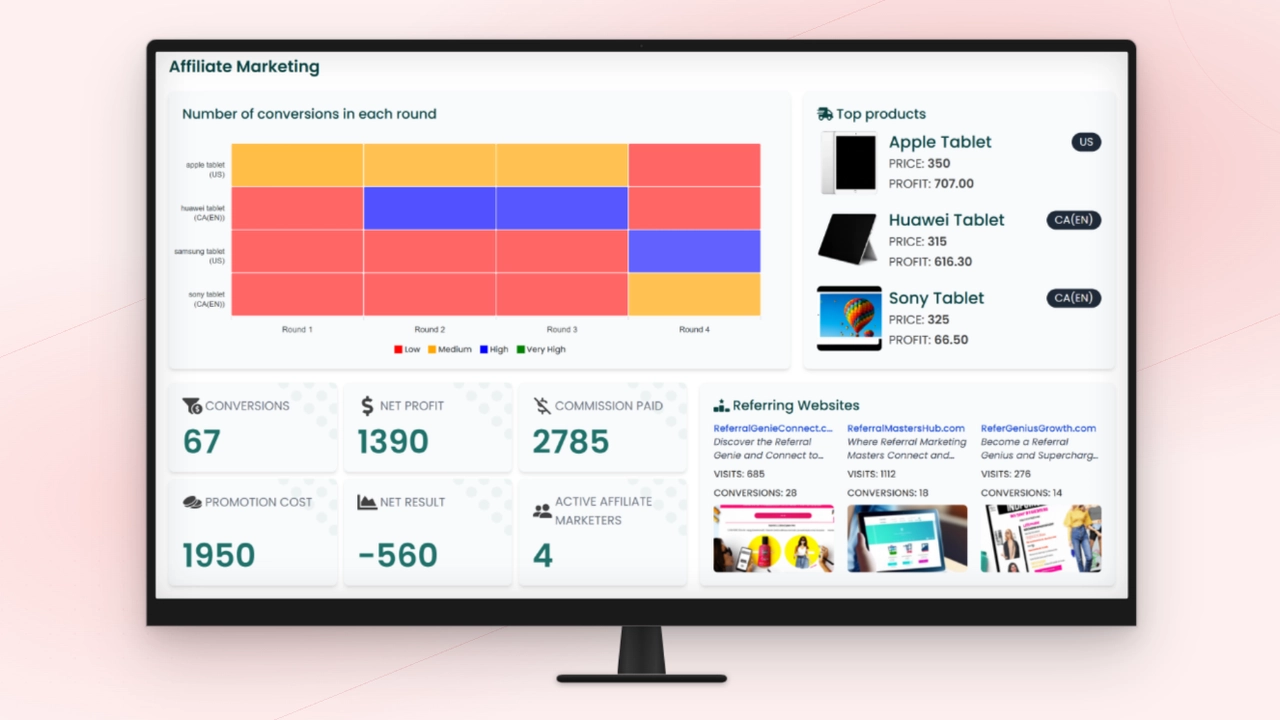
Enter Affiliate Marketing
Launch multiple campaigns, each with their own targeting and conditions and track their performance across time. This allows to tap into new audiences and entice new customer types with custom made offers designed with affiliate marketing partners.
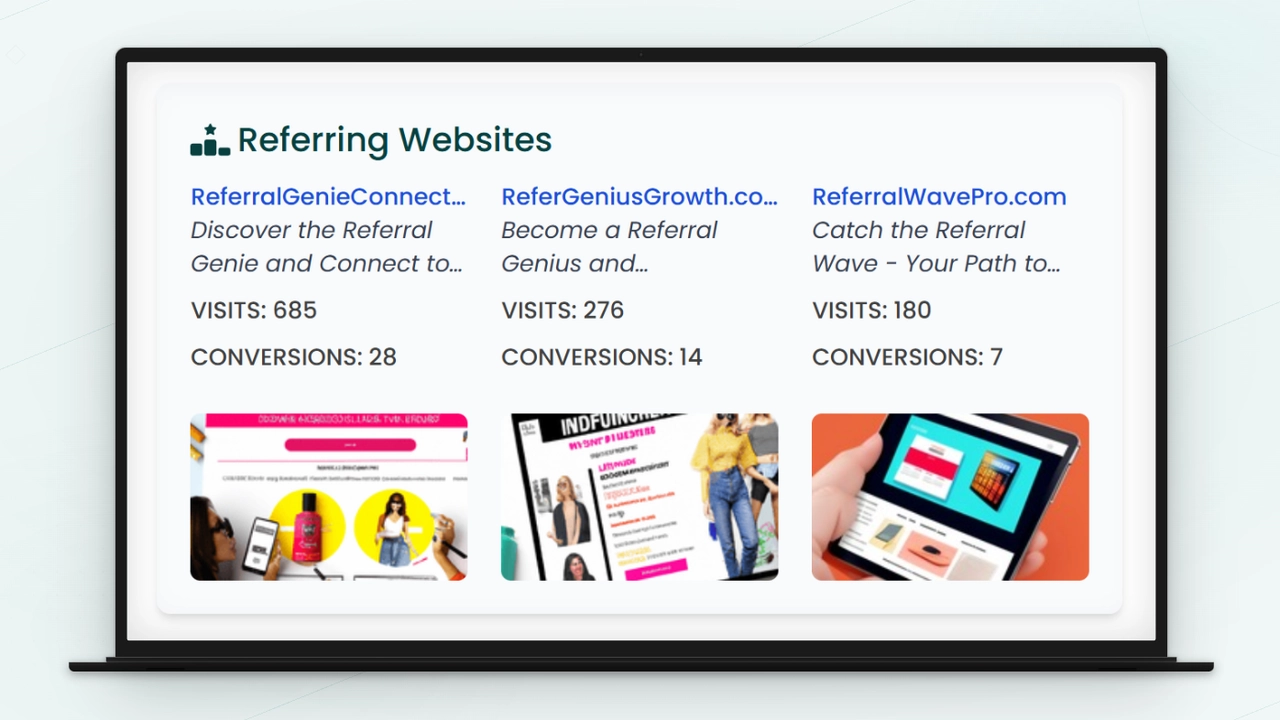
Track Conversions
Manage Performance: Assign conversions to each of your affiliate partners and obtain statistics on the best performing affiliate websites. Provide performance based payment in the form of a commission and bonus prizes to your top affiliate commercial partners in the simulation.
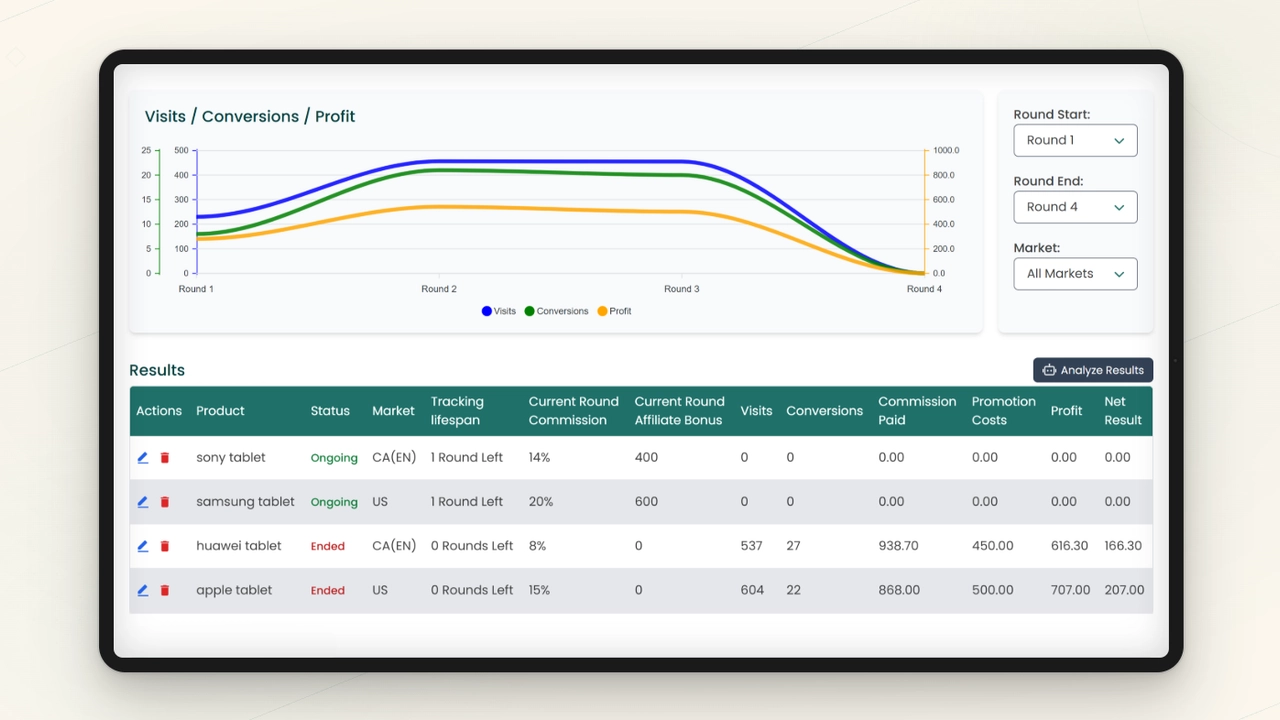
Expand Presence
Provide your top affiliate partners with an additional budget to help them expand their reach and presence and consolidate your partnership while you diversify your backlink profile with new and creative content pointing back to your brand's website in the simulation.
Used as Part of Courses in
Designed to integrate seamlessly into a wide range of university programs and learning objectives.
Bring Performance To your Teaching
Affiliate marketing is everywhere, yet few consumers truly understand how it works. Give your students the clarity — and the hands-on experience — to change that.
Understanding Performance-Based Marketing
The simulation introduces students to the results-driven models in digital marketing. By setting up campaigns, managing partner relationships, and rewarding top performers with commissions and bonuses, learners develop a concrete understanding of how performance-based payment structures work and why they are increasingly central to modern e-commerce strategy.
Driving Traffic and Visibility Through External Partners
Students experience firsthand how affiliate partnerships can expand a brand's reach beyond its own channels — generating inbound content, boosting website visibility, and attracting more targeted traffic. This teaches an important lesson about leverage in marketing: that coordinating external partners effectively can deliver results that owned channels alone cannot.
Sales Attribution and Strategic Decision-Making
A key learning outcome of the simulation is the ability to select and apply sales attribution models — a skill that is both technically demanding and strategically significant. By experimenting with different attribution approaches, students learn how credit is assigned across a customer journey and how those decisions directly influence budget allocation and campaign optimization.
Placing Affiliate in the Broader Marketing Ecosystem
The Affiliate simulation integrates with the website, email, and community modules, showing students how affiliate marketing feeds into and supports a wider, more complex digital strategy. This holistic view helps learners appreciate the interconnected nature of digital channels and prepares them to think and operate as well-rounded marketing leaders.
See the Simulation in Action
Learn more about the Simbound Affiliate Marketing Simulation. No registration required.
Common Questions
Answered
Everything instructors ask before adopting the Affiliate Simulation.

What is affiliate marketing and why is it worth teaching in a simulation?
Affiliate marketing is one of the fastest-growing and most performance-driven channels in digital marketing, yet it is often underrepresented in traditional curricula. The simulation gives students direct exposure to how affiliate networks operate, how partners are recruited and managed, and how commission structures are designed — all in a risk-free environment where the consequences of decisions are immediate and visible.
What can students actually do within the affiliate simulation?
Students set up and manage an affiliate program by recruiting partners, assigning commissions, and rewarding top performers with bonuses. They also select sales attribution models, monitor inbound traffic generated by affiliates, and assess the overall contribution of the affiliate channel to their virtual brand's revenue and visibility.
How does the simulation handle sales attribution, and why does it matter pedagogically?
Attribution is one of the most complex and debated topics in digital marketing, and the simulation brings it to life by requiring students to actively choose and apply attribution settings. This hands-on approach helps learners understand how credit is assigned across a customer journey and how those choices ripple through budget decisions and campaign performance — a nuance that is difficult to convey through theory alone.
How does the affiliate simulation connect to the rest of the Simbound platform?
The Affiliate simulation integrates with the website, email, and community modules, meaning students can observe how affiliate activity drives traffic, supports email list growth, and feeds into broader marketing initiatives. This interconnected setup reinforces the idea that affiliate marketing does not operate in a silo but is a strategic component of a coordinated digital marketing effort.
How is student performance tracked and assessed in the affiliate simulation?
Performance is tracked through detailed reporting that captures key affiliate metrics including traffic generated, conversions attributed, commission costs, and overall return on investment. Instructors can use these reports to evaluate how well students understand the balance between incentivizing partners and maintaining profitability — one of the central strategic tensions in real-world affiliate management.


Content that helps Connect the Dots
Your digital marketing course is set to become the ultimate comprehensive learning experience with the addition of this affiliate marketing simulation. Engage participants through interactive content and track their progress with real learner engagement data.